Learning to tell time is an essential skill for kids to learn. These days teaching kids how to read a clock is easier than ever because of some of the amazing resources that are available. Since there is quite a lot of material around, we have rounded up some of the best websites, free online games, apps, books, clocks, DVDs, and teaching watches to help you teach your kids how to tell the time in a simple and easy way.
Websites with Lessons
There are several sites with online lessons on how to tell the time. We checked out Time Monsters, Apples 4 the Teacher, and Visnos. The site that was the most fun, according to our kid testers, was Time Monsters. It is an animated website that has cartoon fellow by the name of Professor Tempo, giving mini-lessons while monsters try to distract you from the task of learning to read the clock.
Sites with Games
There is no easier way to help kids learn something while having fun than online games. Luckily there is no shortage of time telling games. To help you wade through the vast number of games around, we have picked the ones our kid testers liked the best and tried to find games for a variety of ages and skill levels.
Turtle Diary Time Zone introduces the concepts of seconds, minutes, hours, A.M., and P.M. through this simple exercise, as kids read the clock and fill in the correct time.
Toy Theatre is a simple learning game where you choose the correct answer from a selection of clocks.
ABCya Time Travel is an activity where you practice setting the clock by selecting a type of clock and then dragging the hands of the analog clock or by clicking the up and down buttons of the digital clock.
Stop the Clock a slightly different variation of matching analog clocks to digital clocks. It’s fun.
Mr. Nussbaum’s Bedtime Bandits is a bit different than the other games that are out there. Players take the form of a child with a flashlight, avoiding going to bed.
Primary Games relatively simple game matching an analog clock to a digital clock.
Apps
Apps are kind of perfect for teaching time, they are easy, cheap, and kids love them. Since there are a lot of excellent ones out there, we tested out a few apps, and two that you should check out are Tell Time and Interactive Telling Time. Both of these apps are standouts in the crowded time telling app market.
Books
Another option to help kids get used to the idea of time and clocks is from a workbook or a storybook. There are quite a few books to choose from but here are a few that we like:
My Book of Easy Telling Time: Learning about Hours and Half-Hours is a Kumon workbook that introduces children to the concept of telling time by concentrating on the hours first, and then incrementally teaching children to half- and quarter-hours. The reason we liked this book is that Kumon uses repetitions to enforce the basics to the children. It is also colorful and worth the price for the kids to learn to tell “basic” time on their own without much supervision. The basic requirement though, is the knowledge of reading and writing numbers from 1-12.
Another book we like is Telling Time with Big Mama Cat. It is a book that tells the story of Big Mama Cat as she goes throughout her day and what she does at particular times of the day. This book includes a fold-out page that has a clock with movable plastic hands. Readers can change the time as Big Mama Cat moves from one adventure to the next. The reason we liked this book was partly because of the overwhelmingly great reviews and partly because teachers seem to like this book as a way of teaching time to kids.
Teaching Clocks
A lot of teachers use teaching clocks, they are a great way to help kids learn, you can easily make a simple teaching clock on your own, or there are some handy ones that you can buy.
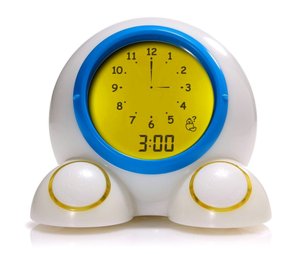
A really popular teaching clock is the American Innovative Teach Me Time! Talking Alarm Clock and Nightlight. It is an interactive, talking time-teaching game that has adjustable skill levels and teaches concepts on the analog and digital clock faces. There are few complaints about how bright the feet are on this clock at night and some other complaints about difficulty in programming the clock and some design issues (numbers too small). But what we like are the features on it.
DVDs
We found two DVDs that people seem to like that helps kids tell the time. Both DVDs have great reviews:
Munchkin Math: Telling Time is a DVD that will help your child learn how to tell the time in a fun, interactive, and engaging way. You can see a promo for this DVD here.
The moves that are covered in this guide are very basic and are ones that kids will probably try on their own if they see other kids doing them. This guide is meant to give you some pointers on how to help your kids perform the moves properly if they are trying them at home.
A couple of things to keep in mind before you get started. Make sure you are spotting your child when they are learning the moves. Most of the videos that are included in this guide show you how to do this. Also before having your child do any gymnastics, be sure to have them stretch for at least ten minutes in order to prevent injury and warm up their muscles.
Getting Started
For the following four tumbling exercises the (forward roll, the bridge, cart wheels and the splits) you should make sure you are not practicing on a hard floor or surface, you will need to use something as a mat. If need to use something as a gymnastics mat you can use an old mattress, sofa cushions, or any large pieces of foam you might have lying around that will provide enough support to prevent injury.
The Somersault/Forward Roll
When you are attempting to teach a child a somersault, make sure you are doing this on a soft surface. In some of the videos you will see the kids using incline mats or cheese mats (because they look like a wedge of cheese). These mats help children get started doing somersaults and other moves where they need help getting their head over their heels. You can make an incline mat by piling up cushions underneath a larger cushion.
The following video has good tips for spotting younger kids that you are trying to teach:
The next video has a good forward roll demonstration using an incline mat:
The Bridge
Have your child lie on the floor with their feet near his bottom and their hands by their ears and help him push up into a bridge.
Cartwheels
If you don’t have a lot of space in your house, have your child practice their cartwheels outside to avoid the risk of injury. The following video give you some good instructions on what to do for a successful cartwheel.
The Splits
The splits are a move that can be super easy for some kids, but for most it takes a bit of work to master. The key to doing the splits is to work on your stretches, so make sure your kids go easy on this when just starting out.
Handstands
There are a couple of steps to mastering the handstand. The following video shows the progression.
The Balance Beam
There are a few different approaches you can take for the balance beam. For very young children you can make a balance beam on the floor using masking tape. Create a masking tape balance beam that is about 8 feet long and 4 inches wide. As the child gets better at walking on the balance beam, they can try doing things like going sideways, backwards, cartwheels, hops, or somersaults. If you want to make something more advanced check out this blog post on how to make homemade balance beam at In Lieu of Preschool. If you wanted to buy a beam you could get something like this High Density Foam Balance Beam.
This video has a great demo on what small kids can do on a simple balance beam.
Warning The advice in this guide is not meant to replace a knowledgeable gymnastics coach. GradeInfinity cannot be held responsible for any accidents in gymnastics that may occur from following any tips that are included in this post.
There are a couple of different ways to go about teaching kids to knit. If you would like to teach younger kids, you might want to start with French or finger knitting because they are much easier than regular and can help with building up confidence. Then when that has been mastered, you can give knitting with needles a try. With that in mind, here is our guide on how to teach kids to knit.
French Knitting using a Knitting Nancy
A Knitting Nancy (also called a Ned, Spool, Tower, or a Knobby) is an excellent device for children because it teaches the essentials, but it is much easier than needles for small hands to use because it holds the child’s stitches while their fingers can move the yarn.
MamaMoontime has instructions on how to make your own Knitting Nancy out of a tree branch and how to use it.
Or if you aren’t quite up to a DIY project you can buy a Nancy along the lines of these guys:
You often see a version of knitting Nancys in toy stores in the craft section. It may take a little bit of time for a child to used get to using a Nancy, but they are generally very child friendly.
A Clover Wonder Knitter makes working with yarn easy for kids, and it comes with a 3 and 6 pin removable head. Most kids love that it isn’t complicated and is very easy to use.
Finger Knitting
If French knitting isn’t something that your child wants to do, maybe give Finger Knitting a try, all you need is some wool and your … (can you guess?) fingers! It’s very easy for small kids and lots of fun once you get the hang of it. The easiest way to learn is to watch someone doing it, so here are some excellent instructional online videos:
Knitting (with Needles)
Okay, here we go, now we are getting down to some serious business. If you are teaching a younger child (ages 7-10), you will want to use smaller needles, try to get a size 7 or 8 that are wooden or bamboo because the yarn can slip off the metal needles. You will also want to start with good quality, thick wool, or acrylic yarn, so it is more comfortable for kids to hold.
One of the best series that we came across for teaching kids is called No-Rules Knitting at the Teen Knit Cafe. It’s a lot of fun and super clear with the instructions. It’s supposed to be for teens, but we think it’s suitable for all ages. You can check out full DVD or some of the online videos that have been posted.
There are also some kits you can check out that are bright and colorful and might help get kids excited about learning. One you may want to consider is the Alex Chunky and Funky Scarf Beginner’s Kit in Box, it has crazy wide needles that look pretty cool. They also offer a few videos that show some basic techniques that are useful and simple for kids to follow, even if you don’t get this kit.
The Best Books and DVDs for Kids
Kids Knitting: Projects for Kids of all Ages by Melanie Falick is a book that teaches kids of all ages using straightforward language, step-by-step instructions, and bright illustrations. Kids will learn all the basics, including finer knitting, casting on and binding in the round and shaping.
DVD The Art of Knitting 4 Kids Kit for ages 5+ that has three different options for teaching kids. There is a promo video you can check out that explains it all. This set is very well-reviewed.
Teaching your kids to cook is probably one of the most useful things that a parent can do for their children. There are lots of great resources that parents can use to help their kids learn about food and cooking. We have rounded up the best cookbooks, cooking shows, websites, and apps that are perfect for kids to help them learn all about cooking.
The Best Cookbooks for Kids
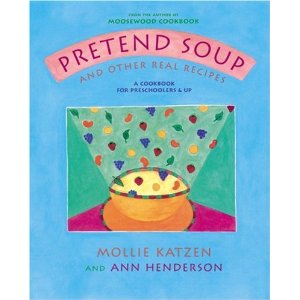
There are too many wonderful cookbooks for kids to choose from, so we decided to find the best cookbook for kids ages 3-7 and the best cookbook for kids ages 7+.
We couldn’t find anyone saying anything bad about this book. Most of the reviews comment on how fun to make the recipes are and how well-illustrated the book is. The Best cookbook for kids ages 7+
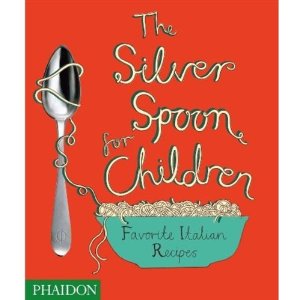
For older kids ages 7+, there is a bit more selection, so it was much harder picking our favorite cookbook for kids. The book we ended up choosing is The Silver Spoon for Children: Favorite Italian Recipes.
People who know food and cooking love this cookbook. This book is mentioned on posts or articles about the best cookbooks for kids on The Chicago Tribune, Grandparents.com, The Independent, TheKitchn, Babyology, Forkandbottle, and many others.
The best thing about this book seems to be that it gives children recipes to cook and eat that are ‘adult’ food, so although they’re presented in a fun and colorful way, the recipes themselves don’t pander to the notion that there is specific ‘child’ food.
*** As a side note, if your kids need a little bit more of a push to get them into cooking, you can try one of the many niche cookbooks that are available for kids. Here is a brief list of some of the ones that look good to us: The Unofficial Harry Potter Cookbook: From Cauldron Cakes to Knickerbocker Glory, Fancy Nancy: Tea Parties, Green Eggs and Ham Cookbook, Roald Dahl’s Revolting Recipes and some of the Star Wars cookbooks including Wookiee Cookies: A Star Wars Cookbook and The Star Wars Cookbook II -Darth Malt and More Galactic Recipes.
Best Cooking Websites for Kids
If cookbooks aren’t your thing, there are some great websites around that give wonderful video demos or ideas for cooking with kids, here are just a few of our favorites:
Weelicious is one of our favorite sites that has some satisfying recipes and great videos with kids helping out in the kitchen.
Kitchen Monsters is a very kid-friendly site that has a nice option that groups recipes by difficulty level, and the recipes look delicious.
Cooking Shows and Webisodes for Kids
One of the easiest ways to get inspired to cook or learn about cooking is by watching a cooking show, and luckily there are lots of great online cooking series or videos for kids or featuring kids to choose from:
Kids Who Love to Cook has excellent videos featuring kids that show various recipes, cooking tips, and also cooking trips to find out where the food comes from(such as how to make cheese and how urban honey is made).
Telmo and Tula –Little Cooks Short cooking shows with the animated character Telmo and Tula – Little Cooks
For older kids/teens try:
Kickin Kitchen is a fun show for preteens that “brings kids and cooking together.”
Tastebuds TV has video games and recipes based on the terrific TVO cooking show for kids.
Cooking Apps for Kids
As most people know, cooking apps are super handy when you are in the kitchen and looking for a recipe. A few that are fun for kids to try are:
Cooking With Kids has over 90 child-friendly recipes and is designed to show kids just how much fun cooking for themselves can be. Easy-to-follow, and nicely illustrated, it will help teach children cooking skills to help them learn to love cooking.
Kung Fu Panda 2 Interactive Cookbook is a fun cookbook for kids that has Kung Fu Panda recipes, cooking demonstration videos, clips from the movie, cool animations, and much more.
There are a few different methods for learning to ride a bicycle, and people have pretty strong opinions on what they think is the best method. We aren’t going to wade into that argument; instead, we are going to break it down into two different techniques that parents can use to teach their children how to ride a bike and show you some of the best instructions we could find for each method. Try them all and see what works best for you.
Learning to Ride a Bike the New School Way
This method focuses on learning to balance first and then worrying about peddling and stopping once the balancing has been understood. People are pretty keen on this method, and there are lots of videos that show you how it is done.
For this method, the key is to have a bike that is slightly undersized so the child can put his or her feet flat on the ground. If you have already bought a bike that is a little bigger than you were hoping they could grow into you could try and borrow a bike or check out garage sales or Craigslist, remember it doesn’t have to be the best bike around just something to help your kids learn to balance.
Once you have a bike that the child can sit on with their feet flat on the ground, you will remove the pedals, and the idea is that the child can learn to balance since their feet can touch the ground, and they can stop themselves from falling. If the child is comfortable, they can scoot along the pavement or use a slight slope to move them forward.
This video about a non-profit biking group in New York is a pretty good argument for this method.
Another great video is from the REI Outdoor School uses this method and gives an excellent lesson on everything you need to know.
Learning to Ride a Bike the Old School Way
The Old School Method is probably how you learned to ride your bike. This method involves taking the training wheels off your kid’s bike and running like hell along beside them, holding either the back of the seat or under the child’s armpits or shoulders until you can’t take it anymore and let go. Your child will either stop, fall, or keep on riding, and hopefully, at some point, will stop safely. Since there is a very high chance your child will fall, make sure they are wearing safety equipment (Especially a helmet that fits properly).
If you are using training wheels and don’t want to remove them cold turkey, it is possible to slowly move the training wheels higher and higher off the ground until they are hardly touching and so the child is weaned off them, and when the time comes to remove them, it isn’t as big of a deal.
If the child is having a lot of trouble with the balance, you can try taking a break from the bike and practice balance with a scooter. A lot of people find riding scooters to be helpful to learn to balance on bikes.
One of the big problems with this method is it is pretty hard on the back of the adult who is running along with the bike. A few people have come with some solutions to this problem using towels or bed sheets, or you can try a version of the grassy slope method.